Showing posts with label Biography. Show all posts

Blue Latitudes by Tony Horwitz


Blue Latitudes by Tony Horwitz, (New York: Picador; 2002), 480 pages.

These days, international travel is relatively easy. All one needs to travel across the world is a bit of money, a passport, and an airplane ticket. The traveller is moved quickly and safely around the globe with relatively little exertion. Today's traveler neither know of  or experience the challengers faced by the voyagers and discoverers of the past. Horowitz acquaints us with these difficulties in this book where he retraces the voyages of perhaps the greatest of England's navigator and explorer, James Cook. Horwitz recaptures the magnificence of Cook's achievements by retracing cooks voyages. He traces his rise from his lowly status as an impoverished farm laborer to his rise through the ranks of the Royal Navy, his voyages pf exploration, and his veneration as a great navigator. To convey the magnitude of Cook's achievements, he joins the crew of a replica of Cook's famous ship Endeavor to show the limited equipment Cook had to achieve what he did. He travels to many of the places discovered by cook, and armed with Cook's log book and other references, sees what Cook saw. Horwitz also tries to put into himself into Cook's position and tries to assess Cook's legacy, particularly in the island nations he discovered in the South Pacific.

This book is written by a fan of Cook. He likens Cook to a real-life "olden day" equivalent of Star Trek's Captain Kirk; he went where no one had gone before. The book demonstrates Cook greatness by giving a contemporary storytelling of Cook's achievements. By travelling to the major places Cook visited, Horwitz conveys to the modern reader the magnitude of Cook's achievements.

This book succeeds in conveying Cook's greatness, without slipping into iconography. Horwitz uses the right balance of reverence, balance, reflection and humour to made Cook's achievements accessible to the modern reader. This book is an entertaining and enjoyable read; its so good that you should read it more than once so you can double your enjoyment.

The Most Dangerous Detective by Steve Bishop


Steve Bishop, The Most Dangerous Detective, (Amazon Create Space Books, 2012), 369 pages.

Corruption occurs in all sorts of places, and manifests itself in different ways. This book exposes the police and political corruption that occurred in the Australian state of Queensland from the late 1950s through the late 1980s. According to Steve Bishop, a core of official corruption existed in Queensland, from police on the beat all the way through the state police force through to two separate police commissioners, judges, politicians, barristers, and members of the executive branch of government. This systemic corruption was eventually exposed in a judicial inquiry that exposed the extent of the corruption that forced the prosecution and eventual conviction of numerous police and politicians including a police commissioner.

Bishop’s book is a roughly chronological treatment of the growth of police and political corruption in Queensland in the second half of the 20th century. He initially focuses on the activities of a detective Glenn Hallahan, a man of considerable reputation earned by his work on solving a triple murder. Hallahan’s detective work led to the arrest, conviction, and eventual execution of the alleged murderer. According to Bishop, the conviction was won through false evidence, perjury, and a forced confession. Following this successful prosecution of an innocent man, Hallahan’s career took off under the initial guidance of corrupt detective Francis Bishoff, who later became Police Commissioner. Hallahan regularly colluded with two other officers, Tony Murphy and Terry Lewis (himself later elevated to Police Commissioner), to profit from their positions of authority. Hallahan used perjury and illegal actions to frame people for crimes. Bishop shows how Hallahan regularly committed perjury to win convictions and close cases and therefore be considered for promotion. Hallahan’s illegal activities did not stop there. He also committed and conspired with others to commit a variety of crimes, including the following:

  • Running protection rackets for illegal bookmakers.
  • Running protection rackets for brothels and prostitutes.
  • Arranging armed robberies, including in some instances, hiring felons from other states to commit the robberies.
  • Arranging for the importation of illegal narcotics from South East Asia.
  • The murder of potential witnesses.

Proceeds from various protection rackets were shared with other members of the so-called Rat Pack, namely detectives Tony Murphy and Terry Lewis with approval of their mentor Francis Bishoff, who eventually was made Police Commissioner. Bishop writes in great detail how for over two decades Hallahan and his Rat Pack colleagues neutered multiple judicial inquiries into police corruption, and fought internal affairs investigations started by a new incorruptible Commissioner appointed from outside the Queensland Police, and found a battle to rid the force of this Commissioner.

Bishop’s book is a damning inditement of the political accommodation of corruption in the Queensland Police Service from the late 1950’s through to the later 1980’s. Bishop does not condemn all police and he is quick to acknowledge the work of honest police. We should not think that corruption doesn’t occur. To think that it can is naïve. People in positions of authority, such as police and their political overseers, can sometimes be tempted to act illegally, or turn a blind eye to graft and corruption. This book shows the consequences of such corruption becoming systemic, where the corrupt obtain political protection so that they brazenly carry on their illegal activities in the open, seemingly above the law. Bishop’s book shows how it was done in Queensland, and the impact of this corruption on the police and their political masters.

This is a detailed book, much more so than a regular non-fiction book. Bishop’s research is conclusive and damning. He writes with an almost prosecutorial zeal to expose the truth with the overwhelming weight of evidence. With all the previous act of perjury, cover-ups, judicial inquiry white-washes, it at times, appears that Bishop is going to do what so few have done before, namely, tell the truth about all the scandals, all the corruption, and all the lies. Bishop names names, and point fingers, and pulls no punches. So effective is he that I was left shaking my head over how bad things were. Given the impact of this book, particularly the range and scope of corruption it reveals, this book should be widely read in Australia (for obvious reasons) and in other places by people interested in the impact of unchecked police and political corruption.

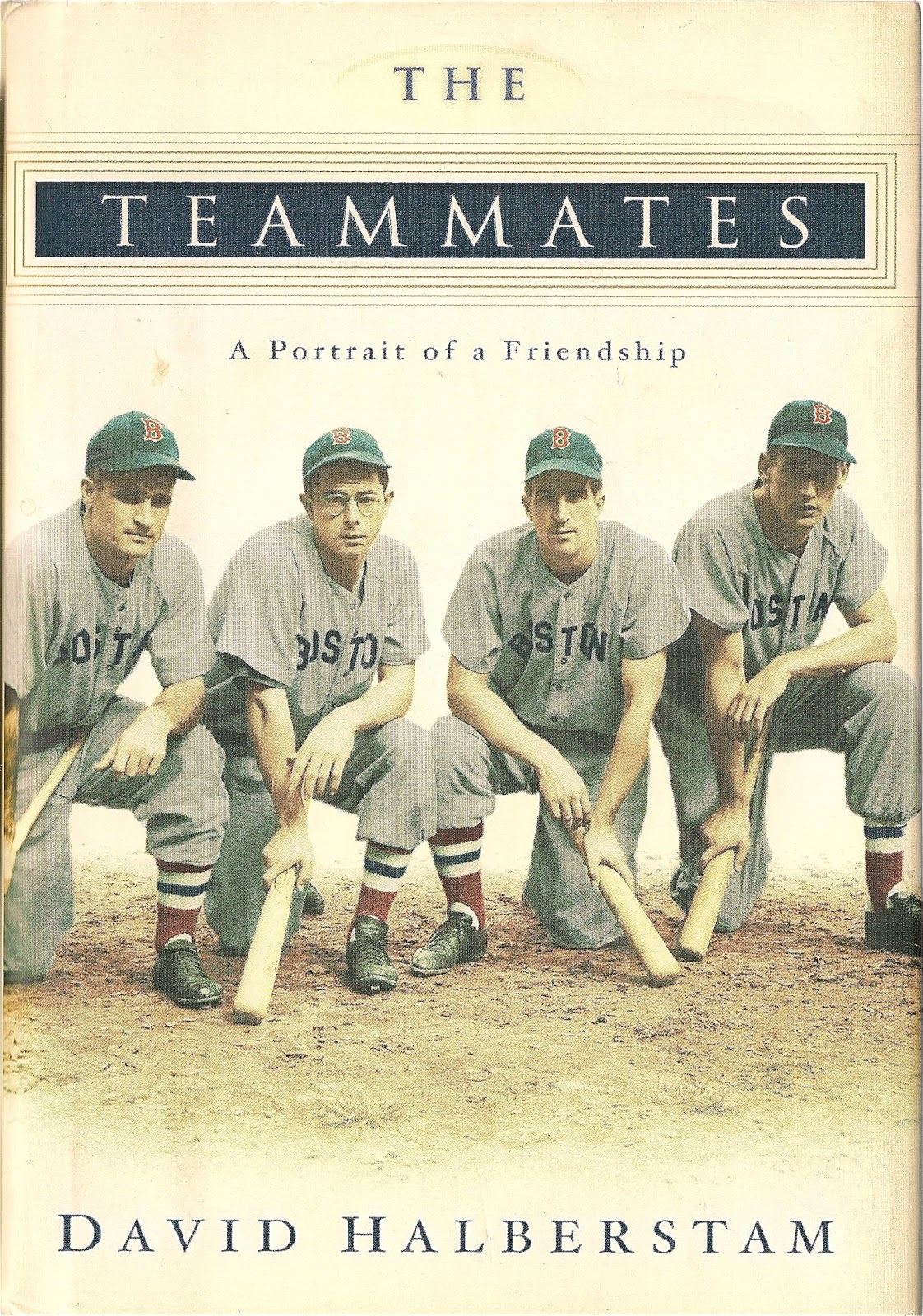
"The Teammates," by David Halberstam


David Halberstam, "The Teammates," (New York: Hyperion; 2002), 217 pages.

This small book is about the enduring friendships between four former professional baseball players (Ted Williams, John Pesky, Dominic DiMaggio and Bobby Doerr). The author provides an oversight of how each started his professional baseball career, how they were recruited to play in Boston, their lives after they finished playing baseball, and the ways in which the friendships continued for the remainder of their lives.

The book benefits a great deal from the author’s love of baseball. He is very knowledgeable of the game, and knows a great deal about these four players from having written a previous book about their famous team the Boston Red Socks. Hence, the obvious appeal of this book to baseball fans. Readers should note that The Teammates is more than just a book about baseball; it’s also a book about friendships and how they endure throughout the years. The author shows us what friends do for each other throughout the years, and what they do for each other in their twilight, more vulnerable years. We also get a glimpse of the lives of professional sportsmen, and how each of the four men made different choices that had significant impacts of the rest of their lives. This dual aspect of the book makes it enjoyable for the baseball fan and the non-fan, or anyone interested in how four men could remain friends for about seventy years.

"The Story of Ernie Pyle," by Lee G. Miller


“The Story of Ernie Pyle,” by Lee G. Miller (New York: The Viking Press; 1950), 439 pages.

The biography of a writer is rarely full of action and excitement. The writer’s life is in one sense solitary, consisting of lonely hours with pen and paper, or paper and typewriter, activities that do not make for exciting reading. Lee G. Miller’s biography of columnist and war correspondent Ernie Pyle is somewhat unusual in that it records the life of a man who spent most of his life reporting on his findings in the field. Pyle travelled widely in the United States and other parts of the Americas, and most famously as a war correspondent during World War II where he travelled to North Africa, Europe and the Pacific and observed and reported the wide range of human events he witnessed. Miller’s book is the report of the life of an active and well-travelled man who spent his life researching and telling other people’s stories during some of the most momentous years of the 20th century.

Miller’s biography of Ernie Pyle, published over 60 years ago, was written when Pyle was relatively well known. Pyle’s work was well known to the newspaper reading public. He was widely read before World War II and became even more widely read as a war correspondent on the North African, European and Pacific campaigns. Miller’s biography nonetheless tells of Pyle’s childhood, youth, college years in Indiana, military service during World War I, career as a newspapers journalist and later columnist at a mid-western and later Washington D.C. newspapers, and his marriage. Pyle was one of the first aviation columnists and was well known among the early aviation community. He subsequently took to the road as a travelling columnist filing columns from all parts of the country, as well as reports from his trips to central and South America. Much of this book is devoted to chronicling Pyle’s life as a travelling correspondent and as a war correspondent.

Unfortunately, this book hasn’t passed the test of time all that well. To this reader, too much time and space is given over to the matters of Pyle’s personal life (i.e. the contents of personal letters, opinions, conversations and recollections of friends and acquaintances) and too little space devoted to Pyle’s views and opinions of the fantastic events he witnessed and reported. For example, the author mentions, on separate occasions, that Pyle met General Dwight Eisenhower and General Omar Bradley, yet we never know Pyle’s recollections or opinions of these meetings. Perhaps such things weren’t disclosed in those days, or perhaps Pyle’s reading public already knew his views from reading his columns, so Miller chose not to include them. The modern reader doesn’t know. The book also suffers from Miller’s practice of rarely quoting from Pyle’s famous columns; but when he does, it’s with terrific effect. For example, Pyle’s column describing his walk on Omaha Beach in Normandy on D-Day, his survey of the wrecked material, equipment and dead servicemen is very moving. Miller’s use of this quotation is done with so great effect that this reader wonders why he chose to quote Pyle’s columns so infrequently. Miller’s failure to use Pyle’s greatest works left this reader with a thirst to read more of Pyle’s original columns rather than continue with this biography. By reading this biography of Pyle, I became more interested in Pyle’s work, than in the Miller’s biography of his life. So, if you are interested in what made Ernie Pyle so revered in the United States, I suggest that you bypass this book and instead peruse some of Pyle’s books, such as Brave Men, Here Is Your War, Men of Iron, or Ernie Pyle in the American Southwest. If you must read a biography of Pyle’s life, you may want to consider more contemporary works that may place Pyle’s work and legacy into context, such as James Tobin’s Ernie Pyle’s War: America’s Eyewitness to World War II, or Ray Boomhower’s The Soldier’s Friend: A Life of Ernie Pyle.

"That’d be Right: A Fairly True History of Modern Australia," by William McInnes


"That’d be Right: A Fairly True History of Modern Australia," by William McInnes, (Sydney: Hachette Australia;  2008), 320 pages.


That’d be Right by William McInnes is labeled as “a fairly true history of Australia”, a history viewed through the author’s eyes, with a particular emphasis on sport and politics. The author approaches Australian “history” through recollection, primarily his recollections of various sporting and political events, and what he was doing when those events occurred in Australia from the 1970s through to today. McInnes narrates a series of loosely related political and sporting stories. The only relationship or connection that these political and sporting stories have with each other is the author. He connects them via a chain of recollections, observation and anecdotes, that are at time humorous, to attempt to add color and interest to what many people would ordinarily be a rather thin gruel of politics and sport. For example, he recalls his family and friends’ activities during some of the events of his youth (the 1975 Australian Federal election), a famous cricket match (the 1977 Centenary Test), events he watched was in college in the 1980’s (political rallies and other sporting matches/races) through to political and sporting events and cultural events he attended as a spouse and father.

McInnes should be lauded for writing about sport and politics from the vantage point as an interested opinionated outsider, and the impact and influence of these events on people’s lives. Many books about sport and politics are written from the vantage point of the privileged insider (journalists), participants (politician or sportsman), or historians. McInnes’s departure is that he writes about these events that span a period of at least 35 years from his perspective, while liberally garnishing it with side stories and anecdotes, much in the same way that made his earlier book such an enjoyable read. The effect is to produce humorous insights, emotional events and sentimental recollections of people’s lives during momentous events in Australia’s recent past. Unfortunately, the attempt at a so-called “fairly true history of Australia” (which may just be a marketing ploy) comes across, at times, as half-baked. At times it reads as a quickly cobbled together collection of stories loosely woven around a theme of sport and politics in a way to cash in as a follow-up to his superior first book.

McInnes is a fine storyteller and should be applauded for memorializing his recollections; however, given that McInnes places himself in the center of events (and his recollection of events) in this book, it is surprising that we know so little of our author. He comes across as somewhat two dimensional. Apparently McInnes is a well regarded actor, and has had some success on both the stage and screen (both movie and television). This success is alluded to but never addressed; it’s as though it’s assumed or taken for granted that if you read William McInnes’s books, you know who he is, and of his acting career. Many readers do not, and may even wonder aloud when reading this book, who this author is and why his views are important enough to read, if at all? Maybe it’s modesty that keeps McInnes from writing about his career achievements in his chosen profession. Or maybe it’s a wish for privacy, or a male preference to discuss manly things like politics and sport. It seems odd though that in a book about essentially about his recollections of major sporting and political events of the past 35 years that he fails to tell the reader about his rise from struggling acting student in Western Australia to established and accomplished stage, film and television actor.

Despite these minor quibbles, McInnes has written a fine book that should resonate with every lover of good, fresh stories based on the observations and conversations of ordinary suburban people. The only thing that this book lacks is the story of McInnes’s career. No doubt he could have enhanced this book with the details of how he became an expert in his chosen profession. No doubt it would be a story worth telling, and when told by McInnes, be entertaining and a useful guide as well as an account of lessons he learned in establishing himself in a most competitive profession. I suspect that he is leaving those stories for another book. Let’s hope he takes the time to writes it one, because if it is like this book, and his previous book, it would be a humorous and enjoyable read.

No Bull: From the Bush to the Baggy Green, by Andy Bichel


No Bull: From the Bush to the Baggy Green, by Andy Bichel,
(Sydney, Australia: ABC Books; 2009), 246 pages.

No Bull is a light and breezy account of Andy Bichel’s life as a cricket player. The book is a recollection of the author’s rise from school boy player in the Lockyer Valley west of Brisbane Australia, through various State and national representative teams. The author recalls his struggles, as well as the help he received from kind souls along the way, and, once he reached the highest levels of the game, the difficulties he faced in staying competitive at that level.

Bichel’s book is an easy-going read, accessible to young and old alike, but, on balance, perhaps unlikely to hold much interest for people not interested in cricket, especially Australian cricket in the 1990’s and 2000’s. The most engaging aspect of Bichel’s book is his demonstration that success can come from persistence. Bichel was regularly disappointed when left out of the starting and touring line-ups of various teams. On the occasions when he was unexpectedly brought into the team due to another player suffering an injury, Bichel often had stand-out and match-winning performances. Bichel was persistent and patient so that when an opportunity came along, he made the most of it. This perhaps is the most compelling aspect of Bichel’s book: persistence, patience and opportunity, when combined, can produce outstanding, spectacular and often career-best results.

Schultz and Peanuts: A Biography, by David Michaelis


Schultz and Peanuts: A Biography, by David Michaelis (New York: Harper Collins; 2007), 655 pages.

David Michaelis’s Schultz and Peanuts: A Biography tells the story of the life of Charles Schultz, the cartoonist responsible for “Peanuts.” Like all biographers, Michaelis chronologically pieces together the life of Schultz, and appears to include all major milestones in his varied and successful life. Michaelis gives an extremely detailed account of his childhood, growing up as the son of a successful and respected barber in Minneapolis/St. Paul. Schultz spent most of his childhood in those cities, apart from a brief period when as a young child his family moved to Needles, California. He attended elementary and high school in Minneapolis, served in the United Stated Army in World War Two in the European theatre, attended art school and ultimately achieved his ambition to be a cartoonist through the newspaper syndication of “Peanuts,” an achievement that brought him considerable notoriety and financial success. Michaelis also provides us with detailed accounts of Schultz’s single and adult life in Minneapolis, Colorado, and later California. Michaelis gives very detailed accounts of his personal life including the death of his mother, his relationship with his father, his courtships, marriages, divorce, children, his illness and death. All such accounts are expected in biographies, however, Michaelis provides extraordinary detail and considerable insight to the reader as to what the influence of these events on Schultz and how they made them the man he was.

Michaelis achieves this on a number of levels. For example, he reveals how Schultz knew from a young age of his gift for drawing, and of his decision at a young age to establish a career as a cartoonist. What is notable is Schultz’s single-minded determination to achieve this goal, and, to continue in his chosen vocation throughout his life only to stop drawing prior to his death. Michaelis portrays Schultz as a single-minded, competitive and determined man.
Michaelis also reveals that Schultz’s life needed not be the subject of a biography because all of Schultz’s life had been revealed through the characters in “Peanuts.” Schultz’s loves, phobias, obsessions, fears, friends, relatives, and even his spouses are revealed through the characters in his cartoon strip. To demonstrate this point, Michaelis liberally sprinkles “Peanuts” cartoon strips through the book to demonstrate the point that Schultz used the experience of his life to form the characters of “Peanuts” and to establish their personalities and relationships. “Peanuts” is almost a metaphor of Schultz’s life. It is an effective and convincing effect that adds considerably to Michaelis’s narrative.

A third of many elements that Michaelis reveals about Schultz is his exceptional cartooning skill, including innovations that were instrumental in establishing him and propelling him to great success and accomplishment. An example of his innovation was his minimalist drawing style that focused just on the characters and their immediate surrounding, whereas his contemporaries used detailed shading with detailed backgrounds. Schultz other great innovation was to give adult personas and problems to his characters – small children. He later took this further by giving those attributes to the animal characters Snoopy and Woodstock.

A notable feature of Michaelis’s book it’s almost universally great and comprehensive detailed account of Schultz’s life, warts and all. Michaelis provides astonishingly exhaustive details of Schultz’s life from childhood through midlife. By comparison, the last 20 years of Schultz’s like are covered in much less detail; it’s almost a rushed-through light weight coverage of these latter years when compared with the rest of the book. This observable fact, perhaps pedantic, does not make the book flawed. Perhaps it’s a reflection that the most interesting part of a person’s life is the struggle to attain success, rather than continuing to do practice your success. Nonetheless, Michaelis has done a fine job in telling the story of a great American success. It’s a story of how a man from humble origins recognized his gift and through ambition and hard work became arguable the most successful and influential practitioner of is craft in his lifetime. In telling the story of Schultz’s remarkable life, Michaelis has written a remarkable book that for many years will be the definitive biography of Charles Schultz. That, too, is something quite remarkable.

The Great Fletch by Hugh Lunn


The Great Fletch: The Dazzling Life of Wimbledon Aussie Larrikin Ken Fletcher, by Hugh Lunn, (Sydney Australia: ABC Books; 2008), 355 pages.


This is a sympathetic biography of Australian tennis “great” Ken Fletcher, written by Fletcher’s childhood and life-long friend Hugh Lunn. The book memorializes the childhood, tennis playing successes, disappointments, adventures, and post-tennis life of the man that had the “most beautiful forehand in the world.”

Hugh Lunn’s biography of almost forgotten and overlooked tennis player Ken Fletcher shines a sympathetic light onto the late tennis player’s life. Lunn had an advantage writing this book: he knew Fletcher from childhood. Both grew up on the same street in Brisbane, Australia. They attended the same school, church, and even resided together in Hong Kong in the 1960’s. They remained good friends until Fletcher succumbed to cancer in 2006. The Great Fletch, therefore, is liberally peppered with Lunn’s personal observations and recollections, along with those gathered from Lunn’s interviews with Fletcher’s extensive world-wide collection of friends and acquaintances.

Lunn’s purpose is to remind us of the varied and charmed life of one of tennis’s great players. Born in Brisbane, Australia, Fletcher, the only son of a train driver, had a gift for tennis. This gift was nurtured on a back yard tennis court, and displayed throughout the world. His ability and achievements were so prodigious that in 2000, Wimbledon, the home of tennis, recognized Fletcher as one of Wimbledon’s great players of the 20th century. He partnered with Margaret Court/Smith to do what no other team has achieved by winning the Grand Slam of mixed doubles (i.e., winning the mixed doubles title at the French Open, U.S. Open, Wimbledon and Australian open in the one calendar year). He also won the Wimbledon Doubles title with John Newcombe, and many other tennis titles, as well as being a member of an Australian winning David Cup team. Sadly, it is only the achievements of Fletcher’s contemporaries that we remember, contemporaries that include Rod Laver, John Newcombe, Tony Roche, Roy Emerson, Ken Rosewall, and others. It is hard to stand out, let alone be remembered, among such notable contemporaries.

Lunn’s book shows Fletcher as a man who loved life, enjoyed meeting people, and looking after them. He was at ease with the rich and famous, as well as the poor and downtrodden, and used his friendships with the wealthy to do good. Despite all his tennis successes, Fletcher considered his life a failure because he failed to win the Wimbledon men’s singles title (he lost 3 times to the ultimate champion). This is a harsh self-assessment. Tennis may have been his profession, but his vocation, ultimately, was helping others. His greatest legacy may be his introduction of Chuck Feeney to Australia. Fletcher maintained a friendship with Chuck Feeney, who, 30 years after their meeting in Hong Kong in the 1960's later would be a billionaire philanthropist seeking to give away his fortune. Fletcher’s long list of friends and acquaintances helped Feeney do just that. At the time of his death, Feeney had donated $350 million to charitable medical-research related causes in Fletcher’s home town, something that would never have happened if it was not for Ken Fletcher’s influence.

Lunn’s biography is a fine memorial to his friend’s memory. It is neither referential nor iconoclastic, but a humorous, realistic and honest portrait of his friend’s success and failures – if they could be called that. Fletcher was not only a great tennis player; he was wonderful person that always tried to do good by being a great and loyal friend and acquaintance to many throughout the world, and that is something definitely worth remembering.

The Don: A Biography by Roland Perry


Roland Perry’s “The Don” is a biography of Donald Bradman's exploits as the world’s greatest cricketer. It is a detailed, comprehensive account of his performance on the cricket field as a boy, through to his retirement from the game as a player, selector and administrator. The breadth and depth of Perry’s book are astounding – it’s almost an annotated narrated almanac. The author’s intention is to comprehensively and exhaustively detail Don Bradman’s cricketing achievements. It is through observing these achievements and Bradman’s conduct while achieving them that we learn something of the character of this private, competitive man of exceptionally rare talent and ability.

Perry’s book’s greatest strength is his coverage of Bradman’s entire cricketing career. By obtaining Bradman’s co-operation in the production of the book, Perry explains in exquisite detail Bradman’s childhood encounters of the game, his first schoolboy innings, as well as notable club, State, invitational and national team batting and bowling performances. We learn of the origin of his unorthodox batting grip, his exceptional concentration, relentless domination of all forms of bowling that broke many batting records, both in terms of the runs scored, and the speed with which he scored them. Perry also demonstrated Bradman’s humility and good natured competition conducted within the true spirit of the game. His achievements, so meticulously described in Perry’s book, give no doubt to even the most skeptical observer of the game, that Bradman was, without doubt, the greatest batsman that the game of cricket has ever seem, or is likely so see ever again. To convince the reader of Bradman’s status in the cricketing world, (and some readers need no convincing, only confirmation), Perry’s book takes more than 500 pages. If there is any weakness in the book it is (arguably) that the recollection of Bradman’s exploits takes too long, over too many pages. Some readers may tire of the recollection of excellence, however, this should only underscore the uniqueness of Bradman’s on-field achievements, namely that there are so many of them, that the diligent reader may tire reading about them. Nonetheless, Perry achieves the purpose of showing the uniqueness of Bradman.

This is a book for cricket fans who wish to be reminded to Bradman’s place as the greatest batsman ever to play cricket. It is also a book for serious sports lovers interested in the on-field achievements of the greatest cricketer that game has ever seen, or is likely to see again.